



BRISTOL VIDEO CO.
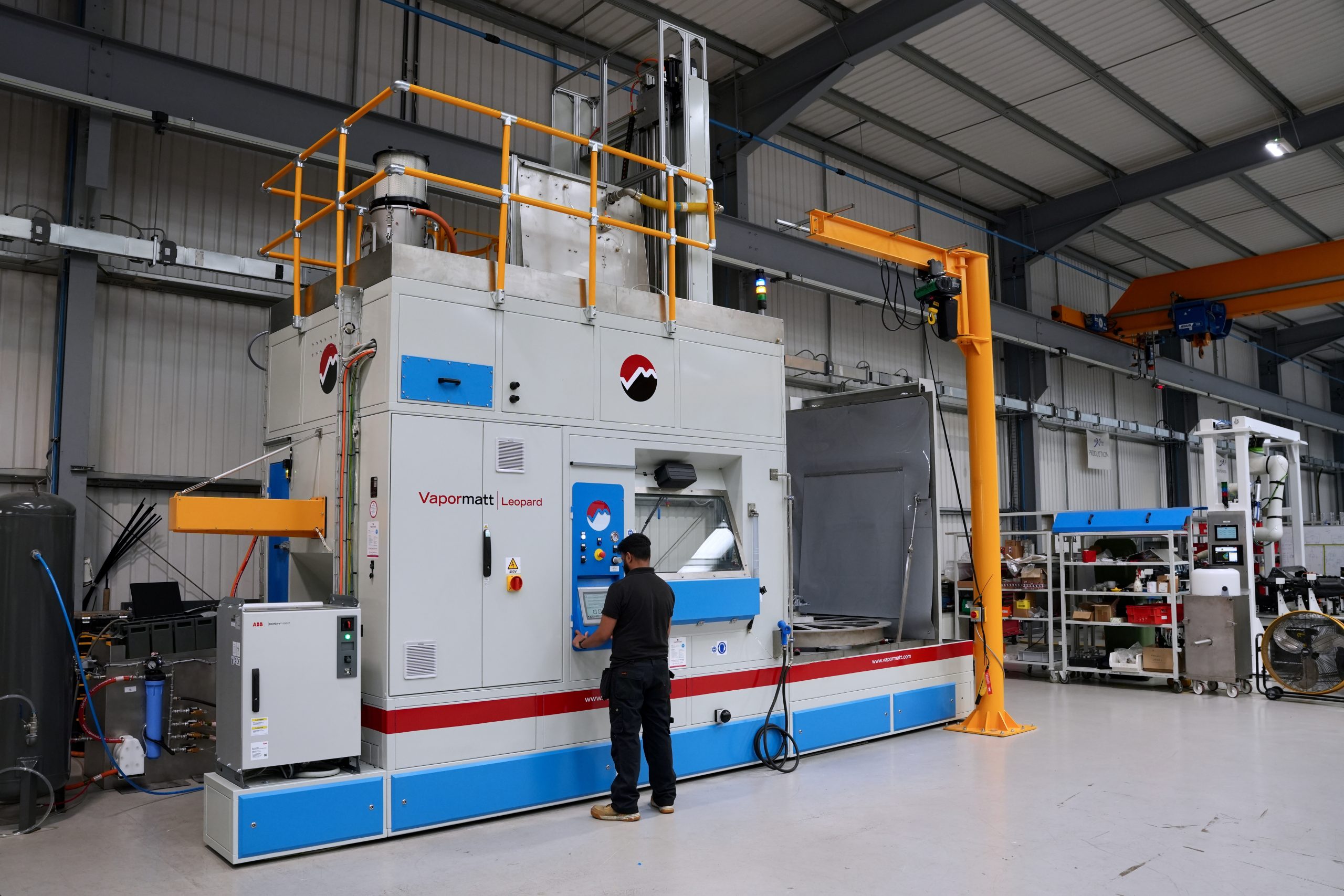
Selling industrial equipment requires a clear explanation of how it works, where it fits into a production process and what makes it worth the investment. Buyers need to understand component handling, process control, output quality and maintenance access. Manufacturing video production gives them a practical way to assess these details before arranging a demonstration or discussing a specification.
At Bristol Video Co., we produce technical product videos for manufacturing and engineering companies across Bristol, London and the South of England. Our work with wet blasting specialist Vapormatt demonstrates how a sustained programme of product filming can support complex sales, including capital equipment used in commercial aviation and Formula One.
Manufacturing video production for Vapormatt: over 40 films since 2021
Since 2021, we have shot more than 40 product videos for Vapormatt. These films are used in sales meetings to demonstrate machinery, explain technical capabilities and help secure capital-equipment sales worth millions.
For this type of sale, the video needs to make the equipment understandable. A prospective customer may need to see how a component is loaded, how the machine controls the process, which operations are automated and how the finished part is removed. Showing that sequence gives the sales team a concrete reference when discussing suitability, production requirements and investment.
Vapormatt’s applications provide useful context. Its wet blasting systems support aerospace manufacturing and maintenance, including the preparation of engine components for non-destructive testing, or NDT. The company also supplies equipment for preparing composite surfaces for bonding in Formula One manufacturing facilities. These are applications where surface condition, repeatability and process control matter. Vapormatt aerospace applications, composite finishing.
The commercial role of the films is reflected in Vapormatt’s published feedback. Marketing Manager Miles Pluckwell explains: “They have helped us secure very high value sales in numerous industries, including with a few Formula One teams.” Read the client testimonial.
What technical buyers expect from video in 2026
Technical buyers increasingly research equipment before speaking to a supplier. The 2026 State of Marketing to Engineers report from TREW Marketing and GlobalSpec, in collaboration with Elektor, found that respondents spend an average of 62% of the buying process online before engaging with sales. It also reports that 94% watch work-related videos, with particular interest in how-to content, whiteboard explanations and product demonstrations. 2026 State of Marketing to Engineers.
For manufacturers, the practical implication is to make useful technical information available early. A product video should explain the application, show the relevant operation and identify the conditions behind any performance claim. It should give an engineer enough information to decide whether further investigation is worthwhile.
Different people involved in the purchase will need different answers. A production engineer may focus on repeatability and integration. An operations manager may need to understand loading, changeovers and maintenance. Procurement and finance will want a credible explanation of operating costs and commercial value. A well-planned film gives each viewer a route into the same equipment.
Plan manufacturing video production around the process
The starting point should be a discussion with the people who design, operate and sell the machine. Before filming, establish what the buyer needs to understand and which parts of the process demonstrate it. This prevents a technically important operation from being missed because it looks less dramatic than another stage.
For a machine demonstration, the brief should establish four things:
- The application: component material, geometry, starting condition and required outcome.
- The operating sequence: loading, fixturing, programme selection, processing and unloading.
- The evidence: approved measurements, inspection results or production data supporting the claims.
- The next step: a sample trial, technical consultation, demonstration or quotation.
The filming schedule then needs to follow the realities of the site. Components, tooling, operators and approved machine programmes must be available together. Where a process requires preparation, cleaning or a lengthy cycle, that time belongs in the production plan.
Agree confidentiality boundaries before cameras arrive. Customer components, drawings, control screens and background work can contain information that should not appear in the finished film. Identifying those restrictions early makes filming and review more efficient.
Filming machinery with technical accuracy
Industrial environments present specific visual problems. Stainless steel enclosures can reflect the camera crew and lighting equipment. Viewing windows introduce glare. Factory lighting and control displays can produce flicker or banding on camera. These issues need checking during setup so that the footage clearly shows the operation.
Camera position is equally important. A wide shot should establish the machine’s layout and scale. Closer views can then explain loading mechanisms, fixtures, tools, nozzles and operator controls. A detail shot becomes more useful when the viewer understands where that component sits within the wider system.
Process timing must remain clear through the edit. If a cycle is shortened for presentation, identify the sequence as edited or accelerated and provide the verified cycle time separately. A fast montage should not leave the viewer with an inaccurate impression of throughput.
Finished-part footage also needs careful handling. A surface can look different simply because the light or camera angle has changed. Before-and-after comparisons should use consistent conditions, while claims about roughness, dimensional accuracy or repeatability should be supported by appropriate measurements. Video can show the process and present the evidence; appearance alone cannot establish a measured engineering result.
Filming arrangements must also respect the site’s operating procedures, guarding and access controls. Plan camera positions with the responsible site team, particularly around moving machinery and automated equipment. HSE guidance on equipment and machinery.
Use graphics to explain what the camera cannot show
Some engineering information is difficult to capture directly. Fluid paths, internal mechanisms, control logic and component interfaces may need diagrams or animation. A short annotated sequence can explain how these elements work together while the filmed footage establishes the actual machine and its operation.
The graphics should use approved terminology, units and specifications. Distinguish a simplified explanation from a measured result, and identify optional equipment where it appears. An engineer should review the script, captions and graphics before the final version is released.
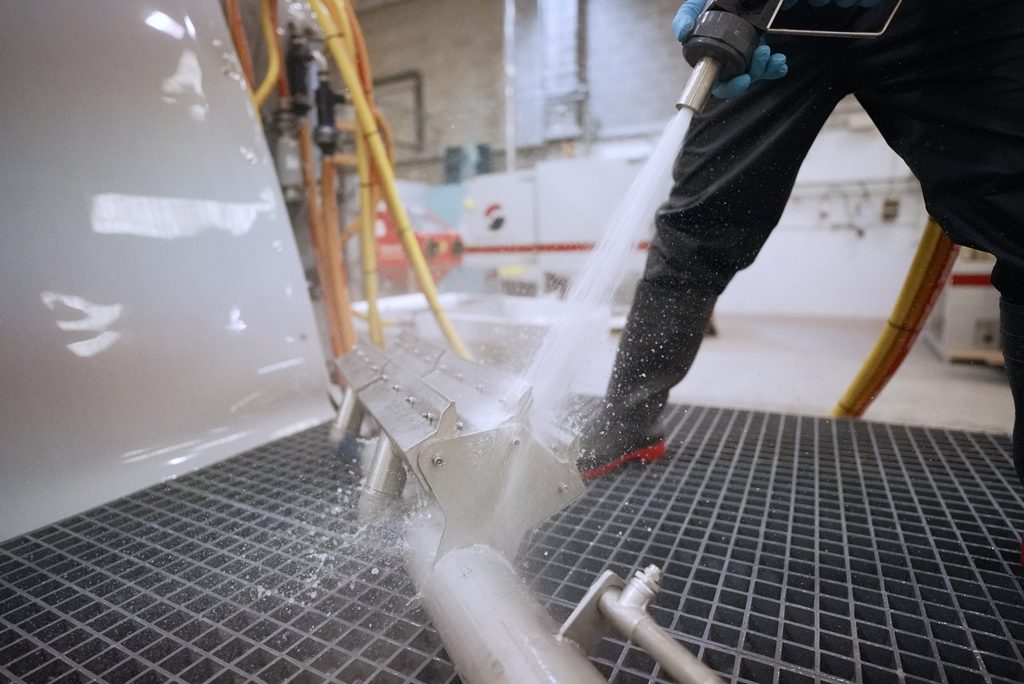
A useful example would be a wet blasting film that combines an overall machine view, footage of component handling, close-ups of the blasting operation and a simple diagram explaining the process. Each element answers a different technical question.
Build a video library for sales meetings, websites and exhibitions
A manufacturing shoot can produce several useful pieces of content when those requirements are planned together. The main product demonstration can explain the operating sequence, while shorter edits focus on individual features or applications. Sales teams can then select the film that matches the prospect’s question.
For example, a concise overview might introduce the machine during an initial meeting. A longer demonstration can support a detailed technical discussion. A captioned exhibition version can communicate the main points without relying on sound, while an offline copy allows the sales team to present reliably at customer sites.
Distribution also deserves attention. Wistia’s 2026 State of Video report identifies LinkedIn as the primary video-sharing channel for eight in ten teams in its research. That supports including focused LinkedIn edits in the production brief, alongside the full technical content on your website. Wistia’s 2026 report.
Captions, transcripts and clear descriptions of important visual information should be considered during planning. They improve accessibility and make technical material easier to reference. Specialist terms, product names and units need a human accuracy check. W3C guidance on accessible video.
Make manufacturing videos easier to find in search
Publish each film with a clear explanation of the product, application and process it demonstrates. A descriptive title such as “Automatic Wet Blasting for Aerospace Component Preparation” gives a potential customer useful context before they press play.
Google’s current guidance makes an important distinction between a page containing a video and a dedicated page where watching that video is the main purpose. For eligibility for Google’s video features, a dedicated watch page is required, alongside other indexing conditions. A product page with a supporting video can still appear in ordinary search results. Google’s video SEO guidance.
Accurate VideoObject structured data can help Google interpret the film, including its title, thumbnail and upload date. It does not guarantee a particular search appearance. The page still needs useful supporting information and a clear route to an enquiry. Google’s video structured data documentation.
For industrial products, make that enquiry specific. “Discuss your component requirements” or “Request a sample processing trial” gives the buyer a clearer next step than a generic invitation to learn more.
Measure enquiries and sales use
Evaluate manufacturing video production against the job each film was commissioned to do. Relevant measures include visits to technical product pages, demonstration requests, sample-trial enquiries and the use of videos in active sales opportunities.
Ask the sales team which films help explain the equipment and which questions remain unanswered. Record when a video is used during an opportunity, while recognising that capital-equipment orders usually involve several influences. This produces a more useful assessment than treating every view as evidence of purchase intent.
A maintained video library also needs version control. When a machine’s specification, interface or available options change, review the affected films so that sales teams and customers are working from current information.
Manufacturing video production in Bristol, London and the South of England
Bristol Video Co. works with manufacturers and engineering businesses across Bristol, London, the South West and the wider South of England. Our experience producing more than 40 films for Vapormatt gives us a practical understanding of technical product demonstrations and their role in high-value equipment sales.
If you are introducing a machine, explaining a specialist process or updating your sales materials, the first step is to identify what your buyers need to see. Share your product information, site location, intended audience and launch timetable, and we can scope the filming and deliverables around those requirements.
Contact Bristol Video Co. to discuss your manufacturing video production project.
External links for reference
- Vapormatt: What is wet blasting?
- Vapormatt: Aerospace and aviation applications
- Vapormatt: Composite finishing and bonding preparation
- Vapormatt: Leopard automatic wet blasting machine
- TREW Marketing: 2026 State of Marketing to Engineers
- LinkedIn: Manufacturing Buyer Research 2025
- Wistia: 2026 State of Video Report
- Google Search Central: Video SEO best practices
- Google Search Central: Video structured data
- W3C: Making audio and video media accessible
- YouTube Help: Adding subtitles and captions
- HSE: Equipment and machinery guidance
