



BRISTOL VIDEO CO.
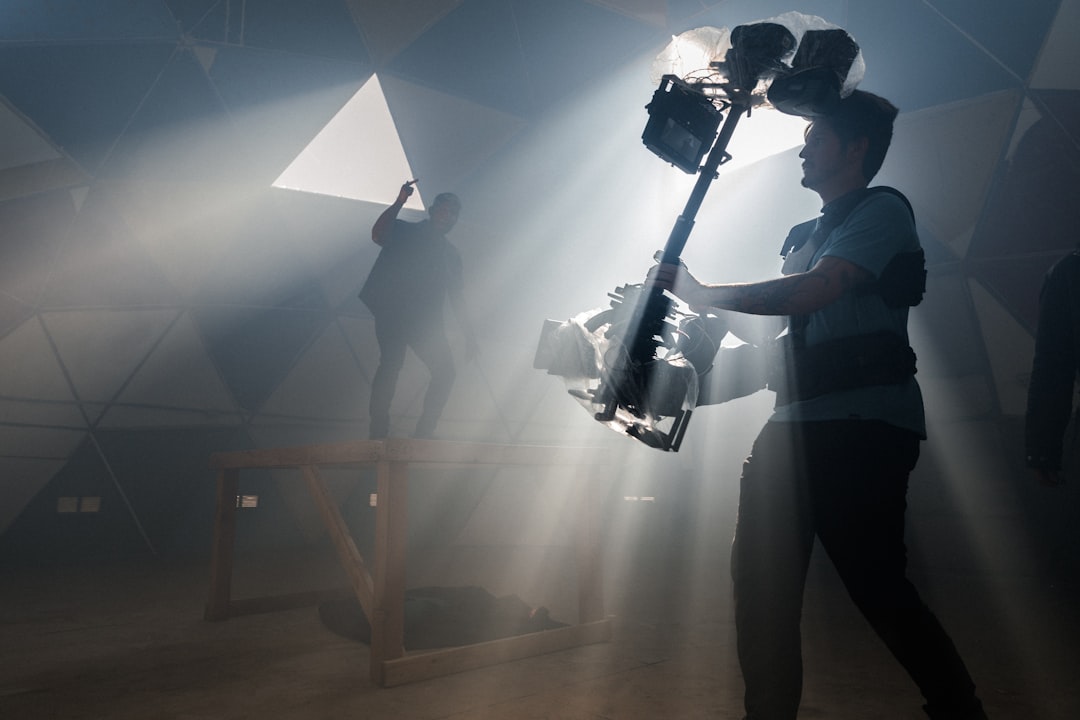
Camera specifications have become increasingly difficult to decipher. 4K, 6K, RAW, 10-bit, 4:2:2, S-Log3 and countless codec names are routinely promoted as reasons one camera is supposedly better than another.
For a business commissioning a film, most of those specifications should not matter in isolation. What matters is whether the technology gives the production team enough information to create the image the project needs.
For professional Bristol video production, three technical choices can make a particularly noticeable difference: bit depth, Log recording and RAW capture. They influence how accurately colours can be reproduced, how much detail can be retained in highlights and shadows, and how far an image can be pushed during the final colour grade.
Used properly, these formats provide considerably more creative flexibility. Used unnecessarily, they simply create enormous files. The skill is knowing when each technology actually benefits the finished film.
Why 10-bit matters in Bristol video production
One of the most significant differences between consumer and professional video acquisition is bit depth.
An 8-bit image can represent 256 tonal values for each red, green and blue colour channel. A 10-bit image can represent 1,024 values per channel. Across the three channels, that equates to roughly 16.7 million possible colour combinations for 8-bit video compared with more than one billion for 10-bit.
That additional information becomes particularly useful when footage is manipulated in post-production. A heavily graded 8-bit image can begin to show banding in skies, walls, gradients and areas of subtle colour. With 10-bit material, transitions between tones are substantially smoother.
This matters for commercial work because the final image rarely comes directly out of the camera. Skin tones may need refining, product colours may need matching to a brand palette, exterior highlights may need recovering and different cameras may need to be balanced against one another.
Professional cinema cameras such as Sony’s FX9 can record 4K 4:2:2 10-bit internally, giving significantly more flexibility than highly compressed consumer formats. Sony also designed the FX9 around a 6K full-frame sensor, allowing its 4K image to be derived from a higher-resolution source.
For clients, the result is not simply a larger technical specification. It is an image that can withstand more work before it begins to fall apart.
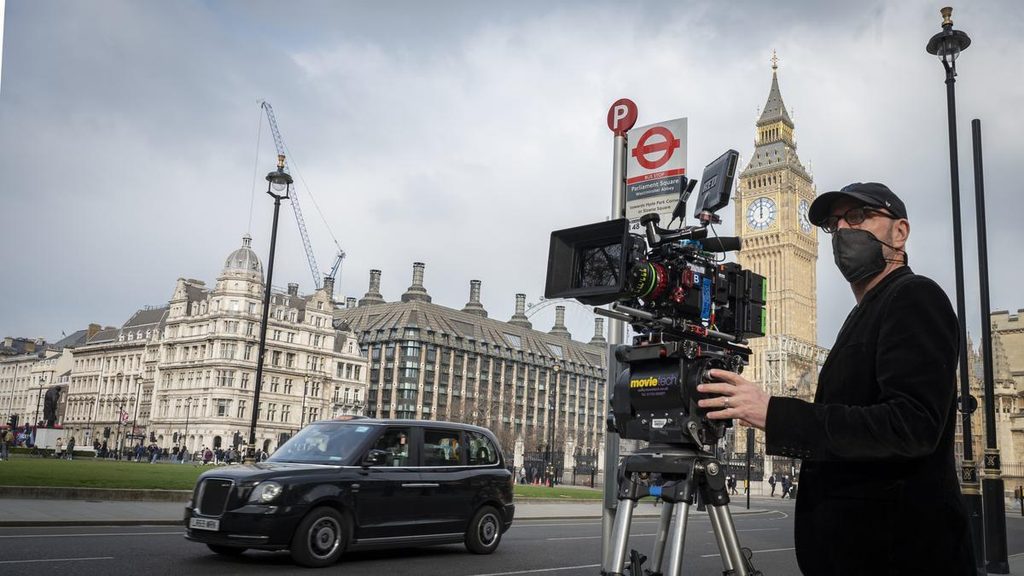
Bristol video production and the difference between 4:2:2 and 4:2:0
Bit depth is only part of the equation. Chroma subsampling describes how much colour information is recorded relative to luminance detail.
Many consumer cameras record 4:2:0. Professional production cameras frequently offer 4:2:2, which retains more colour information.
That difference becomes valuable around fine edges, saturated colours, skin tones, graphics and green-screen work. It can also make footage more robust when colours need significant adjustment.
This is one reason simply asking whether a camera records “4K” tells you relatively little about the quality of the underlying image. Two cameras can both produce a 3840 × 2160 file while recording very different amounts of colour information, dynamic range and compression.
For commercial Bristol video production, those less visible specifications can ultimately matter more than resolution alone.
How Log recording improves Bristol video production
Log recording is another term that is frequently misunderstood.
A Log image looks pale, flat and low in contrast when viewed without processing. That is deliberate. Rather than creating a finished-looking picture inside the camera, a logarithmic gamma curve distributes tonal information in a way designed to retain more of the scene’s usable dynamic range for post-production.
Sony describes S-Log as a wide-dynamic-range gamma curve intended specifically for footage that will subsequently be graded. ARRI uses a similar principle with its Log C system, where the camera preserves information in a form designed for professional colour processing.
Consider filming an interview beside a large office window. The subject’s face may be relatively dark while the exterior is extremely bright. A more limited recording format may force the camera operator to sacrifice either detail in the face or detail outside the window.
A well-exposed Log image gives the colourist considerably more latitude to balance those areas later.
The same applies to filming architecture, reflective machinery, polished products, automotive work and exterior brand films. These are precisely the situations where capturing a wider range of information can make the final image feel more controlled and expensive.
Why shooting Log is only half the job
Recording Log footage does not automatically create a cinematic image. In fact, poorly exposed or incorrectly processed Log footage can look worse than footage recorded using a conventional profile.
The important part is the complete colour pipeline.
The camera profile, exposure, monitoring LUT, editing colour space, grade and final output all need to work together. Modern editing systems increasingly manage this automatically. Adobe Premiere, for example, can identify many RAW and Log formats and transform them into a chosen working colour space while retaining the additional image information for grading.
Professional colour management is designed to keep the image predictable as it moves between cameras, editing software, VFX, grading and final delivery. Netflix describes this consistency as one of the fundamental aims of a properly colour-managed production, while ACES provides an industry-standard framework for maintaining colour throughout the lifecycle of a project.
For clients, this is particularly important when one campaign contains many outputs. A hero film, social cutdowns, vertical edits, product videos and still frames should all feel as if they belong to the same visual world.
Where RAW fits into professional Bristol video production
RAW goes another step beyond conventional Log recording.
Instead of recording a largely processed video image, RAW formats retain information much closer to the data coming from the camera sensor. This gives post-production greater control over how that information is interpreted.
Apple’s ProRes RAW, for example, combines RAW sensor information with the performance characteristics of the ProRes codec family. It is designed to retain the flexibility associated with RAW acquisition while remaining practical for professional post-production.
RAW can be extremely useful on projects with demanding grades, VFX integration, difficult lighting or substantial post-production requirements. External recorders such as the Atomos Shogun series can also provide professional recording formats including ProRes and ProRes RAW alongside monitoring tools used on set.
But RAW is not automatically the correct choice.
Files become much larger, storage requirements increase and the post-production workflow becomes heavier. For a straightforward interview or fast-turnaround corporate film, high-quality internal 10-bit Log recording may provide virtually all the flexibility required with a much more efficient workflow.
At Bristol Video Co., the capture format can therefore be selected around the actual requirements of the production rather than simply choosing the largest file the camera can create.
Better cameras do not replace better lighting
There is an important limitation to all of this technology: a camera cannot compensate for poor filmmaking.
A 16-bit RAW file of badly lit footage is still badly lit footage.
Lighting determines shape, separation, texture and atmosphere. Lens choice changes perspective and depth. Camera movement influences energy. Production design controls what exists within the frame. Sound can completely change how professional a film feels.
The purpose of better acquisition formats is to protect those creative decisions and give the production team more room to refine them afterwards.
This is particularly relevant when filming people. Good lighting and controlled exposure will usually improve skin tone reproduction far more than simply increasing resolution. The additional information available in a 10-bit Log file then allows those skin tones to be handled more delicately during the grade.
Technology should support the image rather than become the image.
Bristol video production for brands with multiple deliverables
Modern campaigns rarely require a single finished video.
A commercial shoot may need to produce a main brand film, 30-second cutdowns, vertical social versions, recruitment edits, website loops, presentations and still frames from the same production.
Capturing a strong master image becomes more valuable as the number of outputs increases.
Higher-quality source footage can be reframed, resized and graded for different platforms without returning to an already heavily compressed file. A high-quality master can then be encoded specifically for each delivery platform.
Vimeo, for example, recommends professional delivery formats including H.264, H.265 and Apple ProRes depending on the workflow, while maintaining appropriate colour and frame-rate settings during export.
The important principle is simple: capture and master at high quality, then create efficient versions for distribution.
Faster workflows between Bristol, London and the South of England
Higher image quality does not necessarily mean slower collaboration.
Production and post-production workflows are increasingly separating lightweight review media from the original camera files. Proxy files can be generated for editing and client review while the much larger original media remains available for the final conform and grade.
Camera-to-cloud systems take this further by allowing proxy media to begin uploading during or immediately after capture. Frame.io describes Camera to Cloud as a workflow in which compatible cameras and recording devices can send media directly into a cloud environment for review or editorial use.
This can be particularly useful when a production is taking place in Bristol while stakeholders, agencies or marketing teams are based in London or elsewhere across the South of England.
The client does not necessarily need to wait for hundreds of gigabytes of original camera material to be transported before the review process can begin.
The result is a useful combination: high-quality acquisition on set and increasingly fast collaboration afterwards.
What businesses should look for in a Bristol video production company
When comparing production companies, camera models should never be the only deciding factor.
A better question is how the production company intends to use its technology to solve the requirements of the project.
How will difficult lighting conditions be handled? How will brand colours remain consistent? Is there enough image latitude for the intended grade? How will multiple cameras be matched? What format will the final master use? How will different social and website versions be produced from that master?
Professional cameras, Log profiles, 10-bit recording and RAW workflows are valuable because they expand the answers to those questions.
They provide more options.
But the value ultimately comes from the people making the decisions.
Choosing the right technology for the story
The most technically advanced workflow is not necessarily the best workflow.
Some productions benefit from RAW acquisition and extensive colour finishing. Others need a lightweight camera package, quick setup and rapid turnaround. Many fall somewhere between the two.
Good Bristol video production is about understanding that distinction before filming begins.
For commercial, corporate and brand projects across Bristol, London and the South of England, the objective should always be the same: capture enough image information to protect the creative idea, without introducing technical complexity that provides no meaningful benefit to the finished film.
10-bit, Log and RAW are powerful tools. What matters is knowing when to use them.
Suggested external backlinks
- Sony — FX9 full-frame cinema camera and 10-bit recording: Sony FX9 technology overview
- Sony — explanation of S-Log and S-Log3: Sony guide to S-Log
- Sony — FX3 professional recording specifications: Sony FX3 specifications
- Adobe — colour management for RAW and Log footage in Premiere: Adobe Premiere colour management
- Apple — ProRes and ProRes RAW professional formats: Apple ProRes and ProRes RAW
- Atomos — ProRes, ProRes RAW and professional recording formats: Atomos recording formats
- ARRI — technical explanation of Log C: ARRI Log C image science
- Netflix — professional camera and image-capture requirements: Netflix camera capture guidelines
- Netflix — professional colour-management workflow: Netflix colour management guide
- ACES — industry-standard colour-management documentation: ACES official documentation
- Vimeo — professional video compression and delivery guidelines: Vimeo video compression guidelines
- Frame.io — Camera to Cloud production workflow: Frame.io Camera to Cloud guide
