


BRISTOL VIDEO CO.
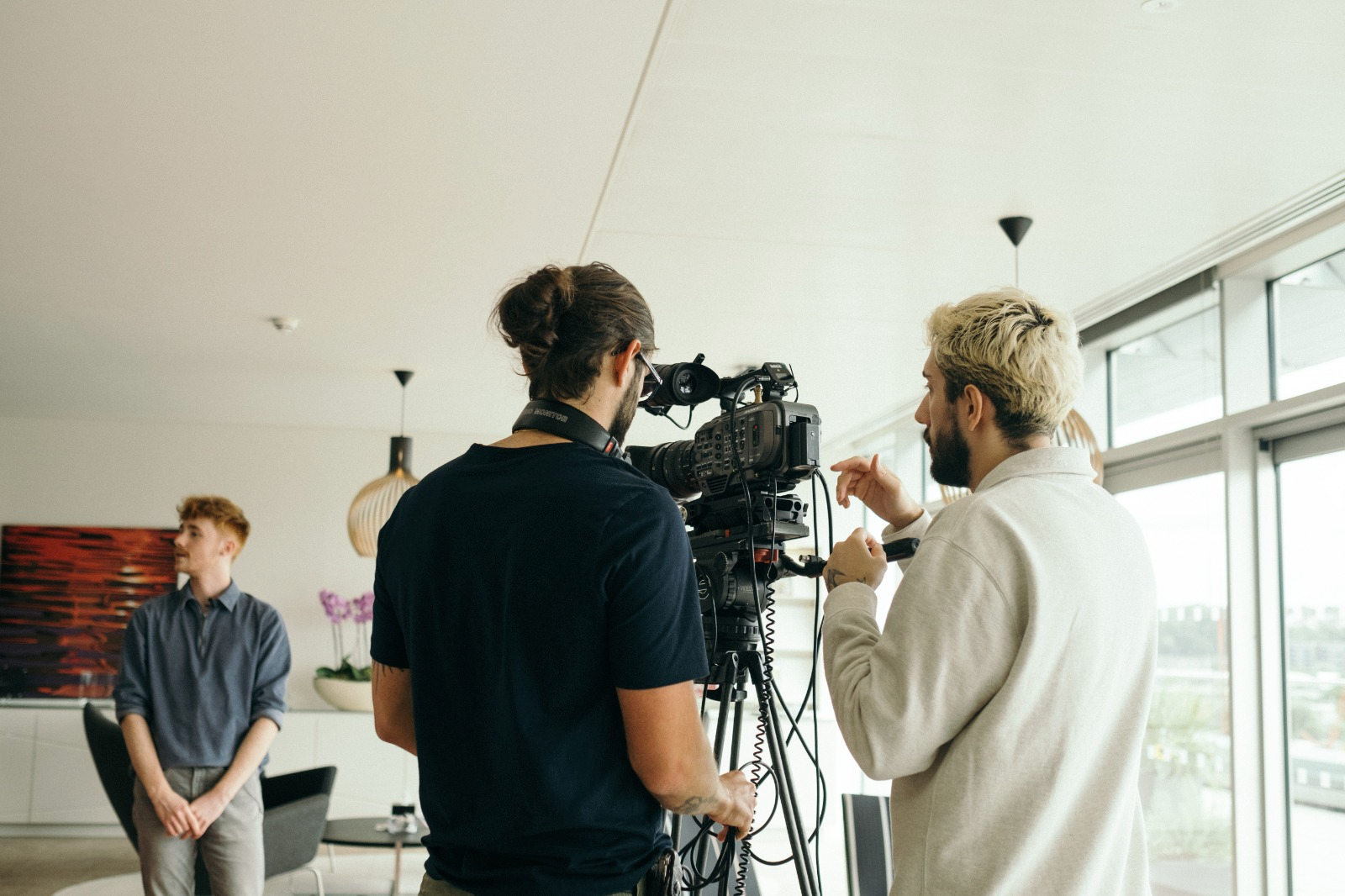
Good corporate videography starts with understanding where the film will be shown and what it needs to do. For this project, we had two outputs to think about: a visually engaging film playing on a loop at a large dinner in London, followed by an extended version for the company’s website.
Our client was a large SME working with military and naval partners around the world. The brief was to show their capability, introduce the people behind the business and give future partners and suppliers a sense of what they are like to work with.
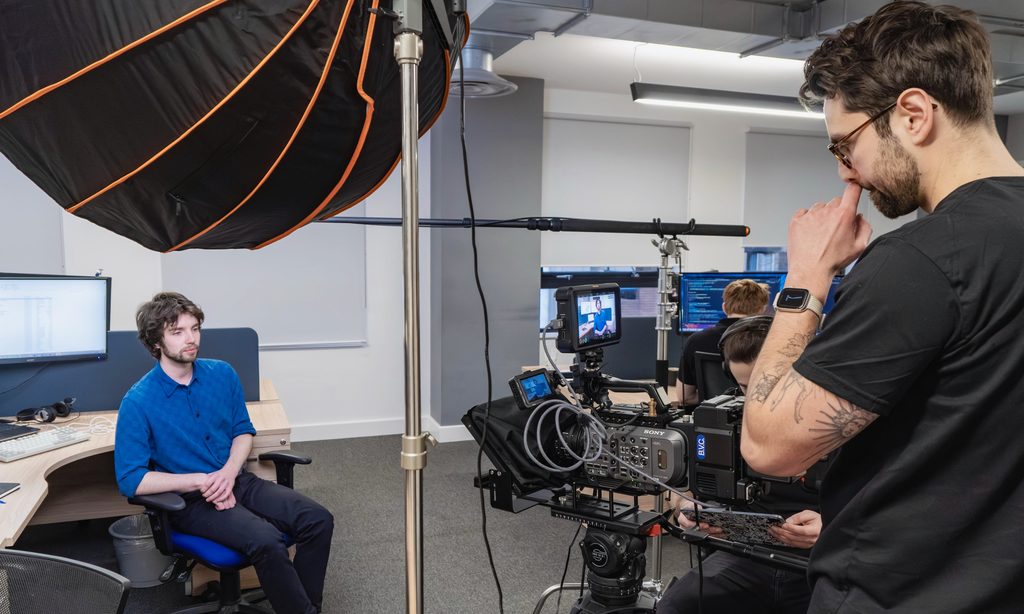
We split the shoot across two days. The first focused on interviews and getting the story right. The second was about capturing the office, the team and the interactions that would give the film its personality.
Corporate videography: getting the interviews right
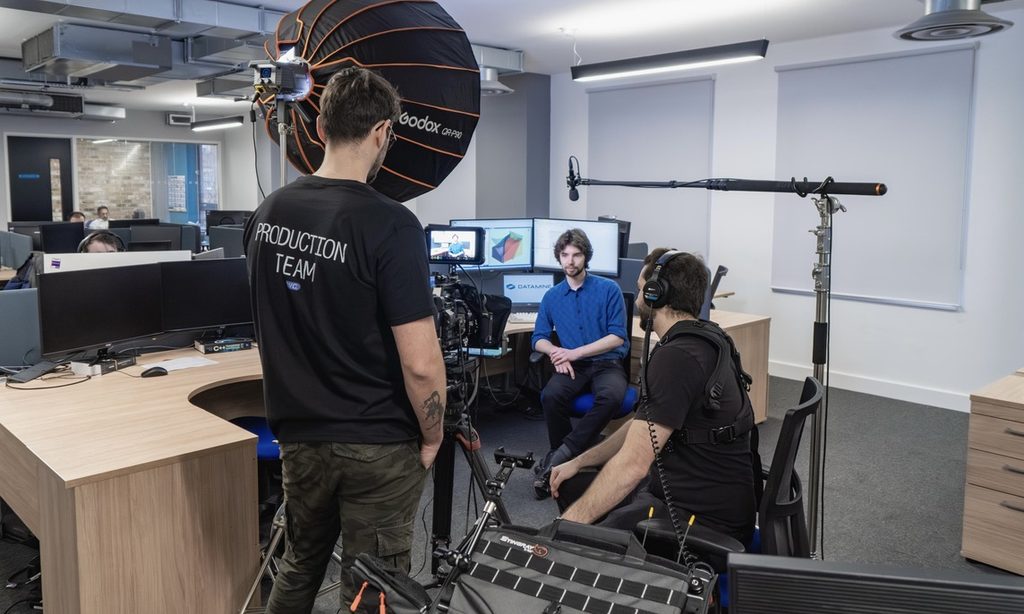
We spent day one filming interviews to build the narrative for the longer website version. These conversations give us the foundations of the edit: clear explanations, useful detail and short, impactful soundbites that connect the different parts of the story.
The aim is to get people talking comfortably about something they know well. You need answers with enough substance to be useful, but they also need to work within an edit. A concise answer in someone’s own words will usually carry more weight than a carefully rehearsed line.
Filming the interviews first also helps shape the B-roll. Once we know which ideas and themes are coming through, we can look for footage that supports them. If someone talks about collaboration, we want to see how people work together. If they talk about relationships, we need moments that give those relationships some context.
We also captured testimonials from key suppliers. These added another perspective to the film, with people outside the company talking about their experience of working with the team.
Day two: people, personality and plenty of B-roll
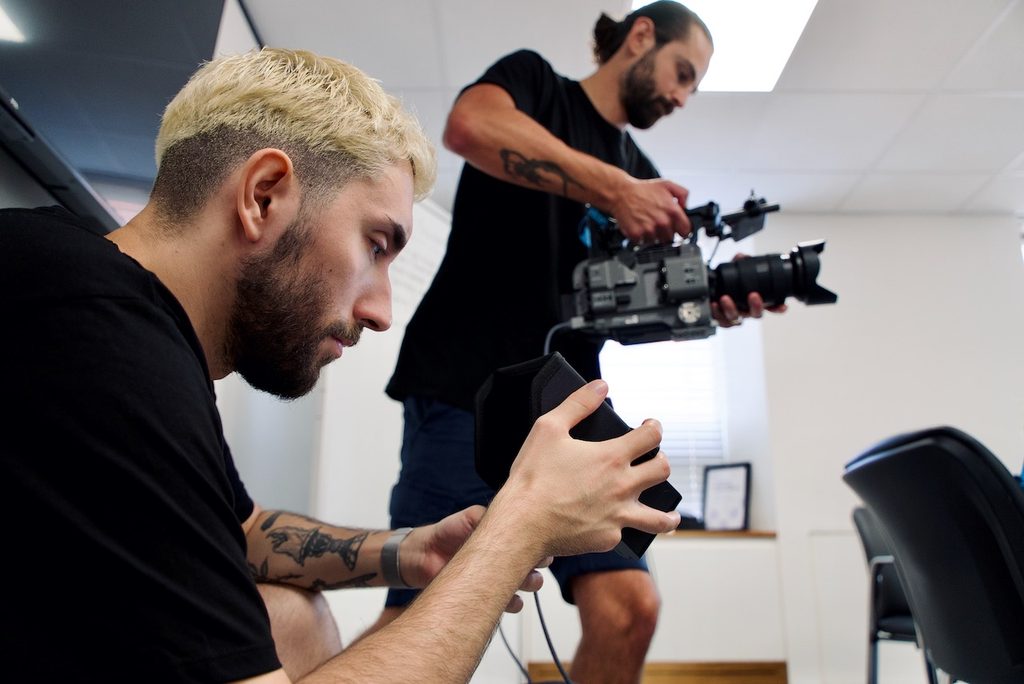
The second day was about capturing the working environment and making the most of the space in the offices.
We wanted a good mix of focused work, conversations, movement and lighter moments. There were some great interactions between colleagues, along with a Christmas jumper photo opportunity that gave us plenty of playfulness and character.
Those moments are useful because they show something you cannot easily communicate through an interview. The way people laugh together, listen to each other or get involved tells you a lot about the atmosphere within a business.
For a company looking to build relationships with future partners and suppliers, that matters. The film needs to show expertise, but it also needs to introduce the people someone might be picking up the phone to or working alongside.
Our B-roll coverage included:
- Wider shots showing people within the office space.
- Closer details and reactions to give us flexibility in the edit.
- Candid conversations filmed through glass and across the room.
- Slow-motion moments that let expressions and movement register.
- Informal interactions that brought warmth into the film.
Having that range gives the edit somewhere to go. We can move between scale and detail, keep the sequence visually interesting and choose shots that support what is being said.
Giving corporate videography an anamorphic feel
We wanted a cinematic edge to the footage, with an anamorphic look that suited the space and gave the film a distinct visual character.
The offices offered plenty to work with. Shooting through glass introduced reflections and foreground layers, while filming across the space let us build compositions with depth. It also gave the candid footage a more observational feel.
That approach works well when you want people to look comfortable on camera. Giving them some space and letting an interaction develop can produce more useful material than continually directing every movement.
We used slow motion selectively. A glance, a laugh or someone moving through the frame can become a strong visual moment when given a little more time. Combined with wider compositions and layered shots, it helped turn everyday office activity into footage that could hold attention on a large screen.
Building a film for a busy London dinner
The dinner version had a specific job. It would play on a loop while guests talked, ate and moved around the room, so it needed to make an impression without depending on people hearing the interviews.
That changes how you approach the edit. Viewers might look up halfway through a sequence or only watch for a few seconds. The images need to work at those points, with enough variation to keep drawing attention back to the screen.
The visual treatment brings together the strongest office B-roll, striking stock footage and dynamic motion graphics. The original footage introduces the team and their working environment, while the stock visuals help communicate the wider context of the business.
The graphics are an important part of that treatment. Tracking makes an element follow the movement and perspective of a shot, so it appears to sit within the filmed space. Masking allows it to pass behind a person or an object, adding depth and helping it feel integrated into the footage.
Getting that integration right takes attention to scale, position, timing and how the graphic moves with the camera. The effect should feel considered and sit comfortably alongside the cinematography.
The loop itself also needs care. Pacing, shot variety and the transition from the end back to the beginning all affect how well it plays repeatedly throughout an event.
Taking the film from the event to the website
The extended website version gives us room to develop the story through the interviews and supplier testimonials.
Here, the spoken material leads the edit. We can build a clear sequence of ideas, introduce the people behind them and use B-roll to show what they are talking about. The footage also lets us tighten interview answers and move between speakers while keeping the film visually continuous.
The two versions use the same shoot material in different ways:
- The event film prioritises visual impact, movement and messages that can be understood at a glance.
- The website film gives viewers more detail through interviews, testimonials and a longer narrative.
Planning for both outputs from the start helps us capture what each version needs. The event loop needs enough strong imagery to stand on its own. The website version needs a story worth following.
Corporate videography in Bristol, London and the South of England
This project brought together the parts of corporate videography we enjoy most: getting useful interviews, finding interesting ways to film a working environment and bringing everything together through the edit.
The technical choices all serve a purpose. Anamorphic framing gives the footage its character. Shooting through glass creates depth. Slow motion gives small moments more presence. Tracked and masked graphics help connect the visual treatment with the filmed space.
At the centre of it are the people. Their knowledge, relationships and personalities give the film something to say.
If you are planning a corporate video in Bristol, London or elsewhere in the South of England, get in touch with Bristol Video Co. Whether it is an event film, a website promo or a shoot that needs to deliver both, we can help plan the interviews, coverage and edit around how the video will be used.
Corporate Videography: Further Reading and Technical Resources
Anamorphic lenses — Adobe
For explaining the anamorphic look and cinematic framing.
Master Anamorphic lenses — ARRI
A technical reference for anamorphic cinematography.
Anamorphic lens characteristics — Cooke Optics
Further reading on the optical characteristics behind the look.
What is B-roll? — Adobe
Fits the section on capturing supporting footage and building sequences.
Lighting handbook — ARRI
Useful background on lighting people and spaces.
Motion tracking — Adobe
Supports the explanation of graphics following movement within footage.
Tracking and stabilisation workflows — Adobe
A more detailed technical reference for tracking shots.
Mask tracking — Adobe
Explains how masks follow moving subjects.
Animating shape paths and masks — Adobe
Relevant to integrating animated elements into footage.
Roto Brush and Refine Matte — Adobe
Supports the explanation of isolating people so graphics can appear behind them.
Stock video footage — Adobe Stock
Fits the paragraph about using stock visuals alongside original footage.
Editing and colour grading training — Blackmagic Design
Further reading on editing, colour correction and finishing a film.
