



BRISTOL VIDEO CO.
What do your customers need to see?
If you are buying a machine, a dramatic shot of a factory only tells you so much. You want to see the machine working, how much space it takes up and what the operator needs to do. That is a useful way to approach AI video vs real video: start with the information your customer needs.
New research gives that decision some context. A study published on 16 October 2026 found that 58% of UK respondents did not trust products advertised with AI to be described accurately. The survey, commissioned by Auros and conducted by Talker Research, included 1,000 UK adults. It measured attitudes towards AI retail advertising, rather than the performance of individual videos.
For a business commissioning video, the practical lesson is to think carefully about what the audience will believe they are seeing. A film should leave them with a clearer understanding of your offer and enough confidence to take the next step.
AI has a place in that process. So does a camera pointed at something worth showing.
AI video vs real video: match the method to the job
“AI video” can mean several things. It might describe a completely generated scene, or footage recorded on location and edited with AI assistance. Those approaches serve different purposes.
Adobe’s September 2026 announcements illustrate the range: its new Premiere tools cover generating footage and sound effects, while audio tools in public beta tackle tasks such as noise reduction and separating overlapping speakers. The same editing environment can help create new material or improve an existing recording.
Before choosing a method, decide what each part of your film needs to communicate:
- Film it: customer interviews, staff stories, working products, premises and events where the value comes from showing what actually happened.
- Generate it: clearly fictional scenes, abstract visuals and creative concepts where the imagery does not need to document your business.
- Combine them: original footage supported by animation, graphics or generated settings that help explain the idea.
A manufacturer, for example, could film its product operating and use an animation based on approved technical information to explain an internal mechanism. A service business could record a knowledgeable team member and add graphics that make their explanation easier to follow.
The wider industry is investing in this combination. WPP’s production hub, opened in East London on 23 September 2026, brings AI-powered virtual production together with physical studios and editing facilities. Our reading of that investment is simple: the choice of tools should follow the creative brief.
AI video vs real video: compare the full cost
A software subscription and a finished production quote cover very different amounts of work.
Generating a clip is one part of making a film. Someone still needs to develop the idea, judge the material, build the edit, check the details and deliver versions that work where you intend to publish them.
When comparing AI video vs real video, ask for quotes against the same brief. Check four things:
- Finished outputs: the number of films, their lengths, aspect ratios and delivery requirements.
- Production and finishing: filming or generation, editing, sound, graphics and captions.
- Revisions: the included rounds of changes, who approves the work and how corrections to product or brand details will be handled.
- Usage and handover: where you can use the films, what files you receive, music licensing and any ongoing charges.
Then look at the most demanding shot in the proposed film. If it shows someone handling your product, ask how the team will keep its size, packaging and behaviour accurate. A sample that reflects your actual brief gives you a useful basis for judging the method and the work involved.
Filming needs the same scrutiny. A shoot can lose valuable time if a product is unavailable, a location is not ready or the right contributor cannot attend. Preparing those details can be one of the most effective ways to make a production budget go further.
Compare the cost of getting to an approved, usable film. That is the figure that matters.
Why we filmed Kinisi Robotics in a working warehouse
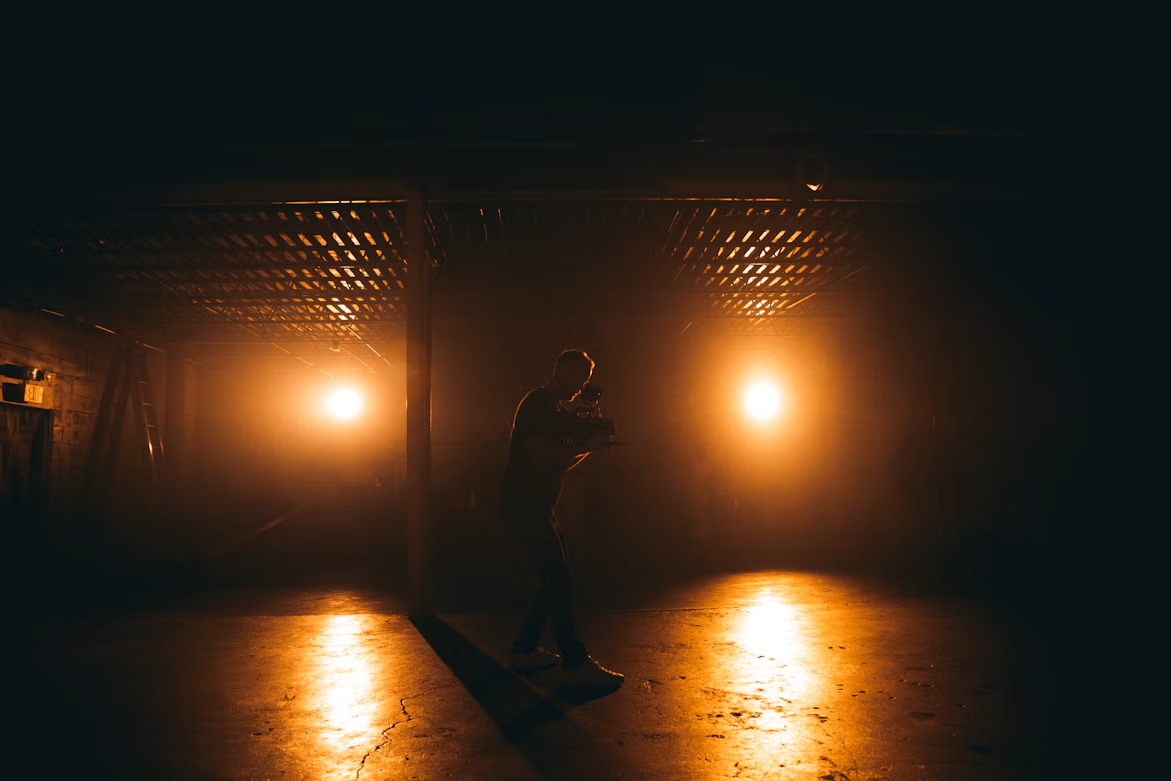
Our work with Kinisi Robotics is a practical example. We filmed its technology in an operational warehouse, creating a promotional film for online use and trade shows. The setting was part of the explanation.
A warehouse gives viewers context: the space around the robot, the objects it interacts with and the environment in which it operates. Those details help a potential buyer understand what they are looking at and form more useful questions.
The same thinking applies beyond technical products. A recruitment film can show the workplace a candidate would join. A venue film can show how the space is used. A customer interview can explain what someone needed, why they chose a supplier and what changed afterwards.
The detail makes the difference. “They were great to work with” says much less than an explanation of how a team handled a difficult deadline or solved a particular problem.
Original footage still needs careful editing. Changing playback speed or removing context can affect how a product appears to perform. Showing something clearly means preserving the information the viewer needs to judge it.
Keep the creative idea accurate
Creative freedom and product accuracy need to be considered together. You can build an imaginative campaign around a product while keeping its features, capabilities and customer claims grounded in reality.
This matters when generated footage looks like a demonstration. CAP’s guidance makes clear that disclosing AI use does not resolve a fundamentally misleading message, such as imagery that exaggerates what a product can achieve.
Agree early on which scenes will document something real and which will illustrate an idea. That gives everyone a clear basis for reviewing the finished film.
Check the intended publishing platform too. YouTube requires disclosure for realistic AI-generated or altered content, including scenes that never happened and depictions of real people doing things they did not do. Building those decisions into the brief avoids uncertainty at delivery.
Make the filming useful beyond one edit
A main film is often only part of what a business needs. Sales teams may want a concise demonstration. Social channels may need a short introduction. Prospective customers may want an answer to a specific question.
Plan those uses before filming.
For example, a service business could build a shoot around a main company film, three answers to common customer questions and shorter social edits. The final scope would depend on the contributors, locations and time available, but the principle is straightforward: capture material with a clear use in mind.
Each version still needs editing and approval, so include it in the quote. Agreeing the outputs early also affects how the footage is recorded. If you need portrait and landscape versions, the team can compose shots for both.
Think about what your sales team explains repeatedly. A short film answering a genuine customer question could become a useful part of follow-up emails, proposals and meetings.
Give viewers a clear next step
Decide where each film will appear and what you want someone to do after watching it.
A product demonstration should sit close to the relevant specifications and enquiry option. A customer story can support the service it discusses. A social clip should lead to a page that continues the same conversation.
Make that page useful. Explain the offer, show relevant work and make it easy to ask a question. Someone interested in one service should be able to reach the right information without searching through the whole website.
Include accurate captions so people can follow the film when they cannot hear the audio. Check automatically generated captions before publishing, since mistakes can change the meaning of what was said.
Then measure what matters to the project. That could be suitable enquiries, demonstration requests, booked calls or use in sales conversations. Ask new leads which content helped them decide to contact you. Their answers can help you judge the film and plan the next one.

Planning a video for your Bristol business?
At Bristol Video Co., we create corporate videos, product films and promotional content that help businesses explain their work.
If you are weighing up AI video vs real video, send us a few lines about the project, who you want to reach, your budget and your deadline. We can help you decide what needs filming and how to make the finished content useful.
Sources and further reading
- Auros: October 2026 research on consumer attitudes towards AI advertising
- Adobe: new generative video and audio tools in Premiere
- WPP: the launch of its East London production hub
- Deloitte: Digital Consumer Trends 2026, UK research
- IAB: The AI Ad Gap Widens
- IAB: AI transparency and disclosure in advertising
- ASA and CAP: AI disclosure and misleading advertising
- Advertising Association: responsible use of generative AI in advertising
- YouTube: disclosing AI-generated or altered content
- Google Search Central: video SEO best practices
- Google Search Central: creating helpful, reliable content
- W3C: creating accurate captions and subtitles
